Garlic (Allium sativum)
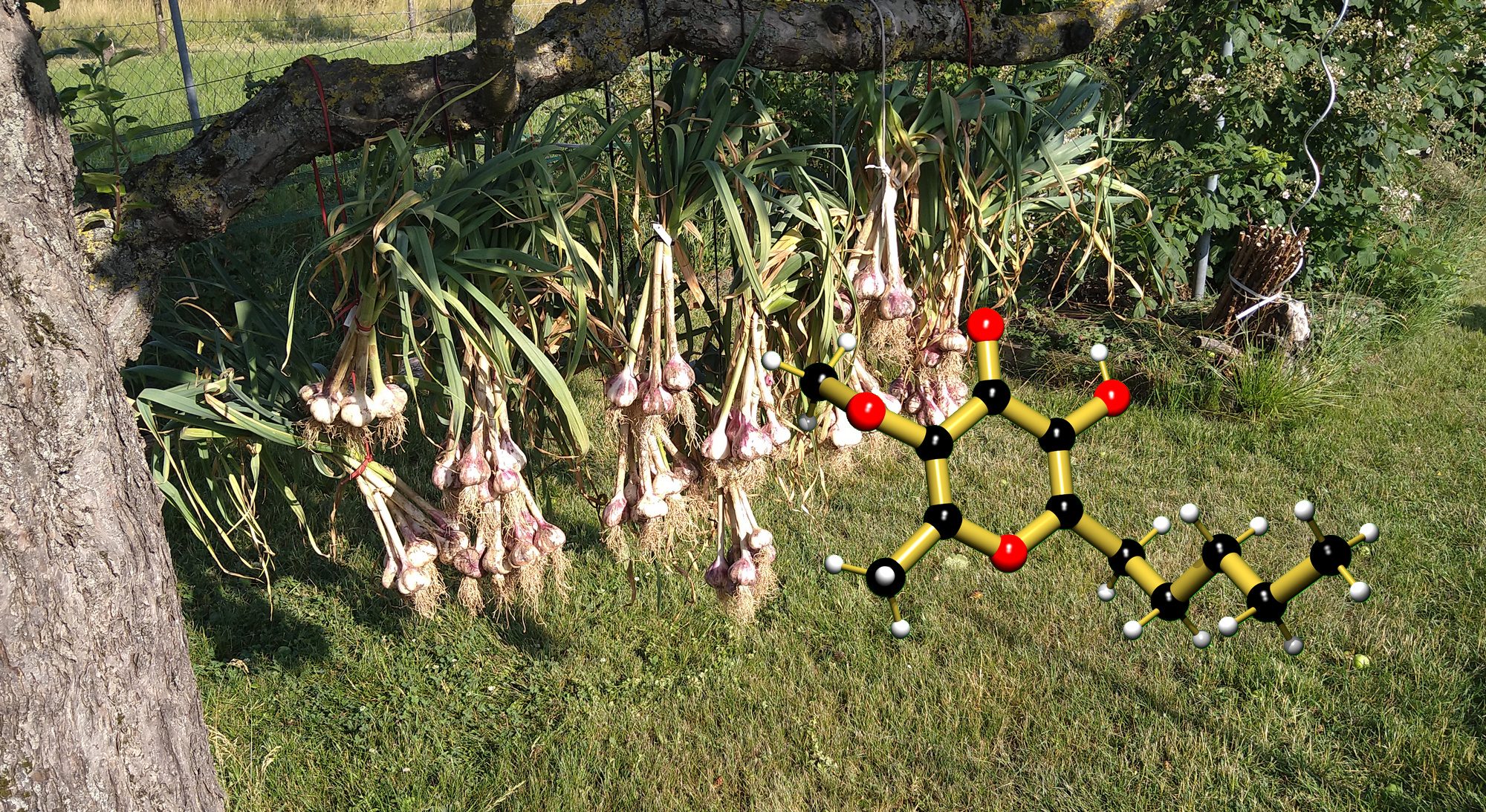
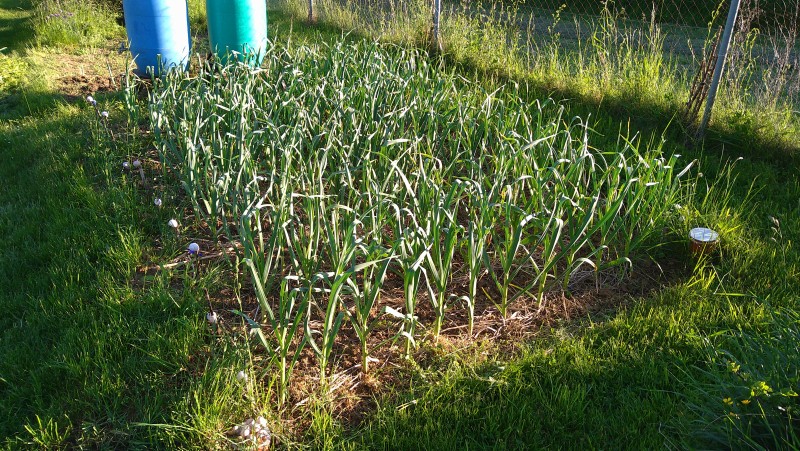
Garlic is a spicy and tasty vegetable with an amazing arsenal of chemicals that has presumably evolved as a defensive mechanism against all kinds of herbivores. Obviously, this strategy has failed with many humans, at least with the alliophiles! On the other hand, it is one of the rare plants in my garden that is not devoured by slugs! I am not going to regurgitate instructions on how to grow garlic because there are already existing pages on this topic. One nice example, in german, is at Wurzelwerk.
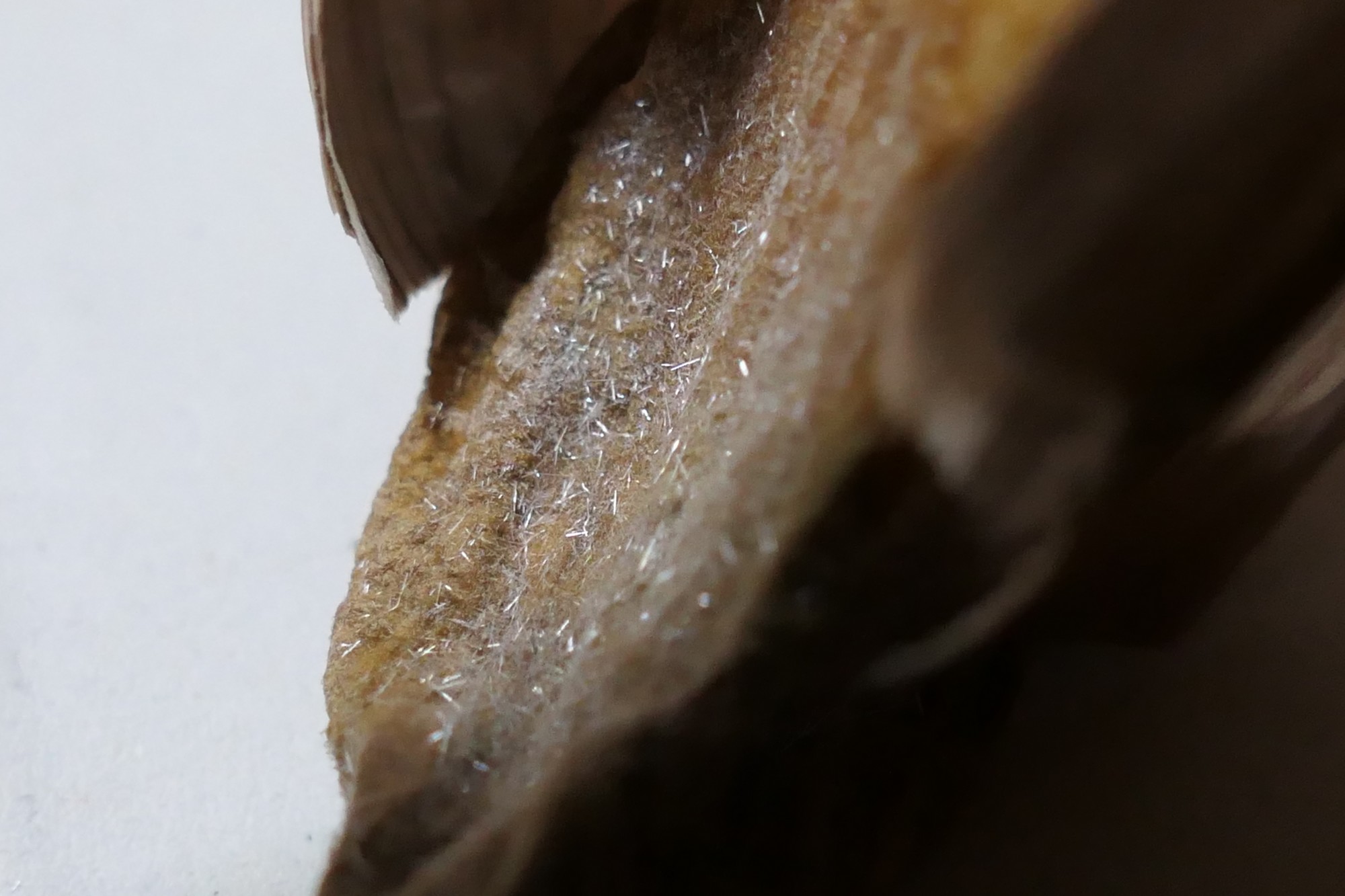
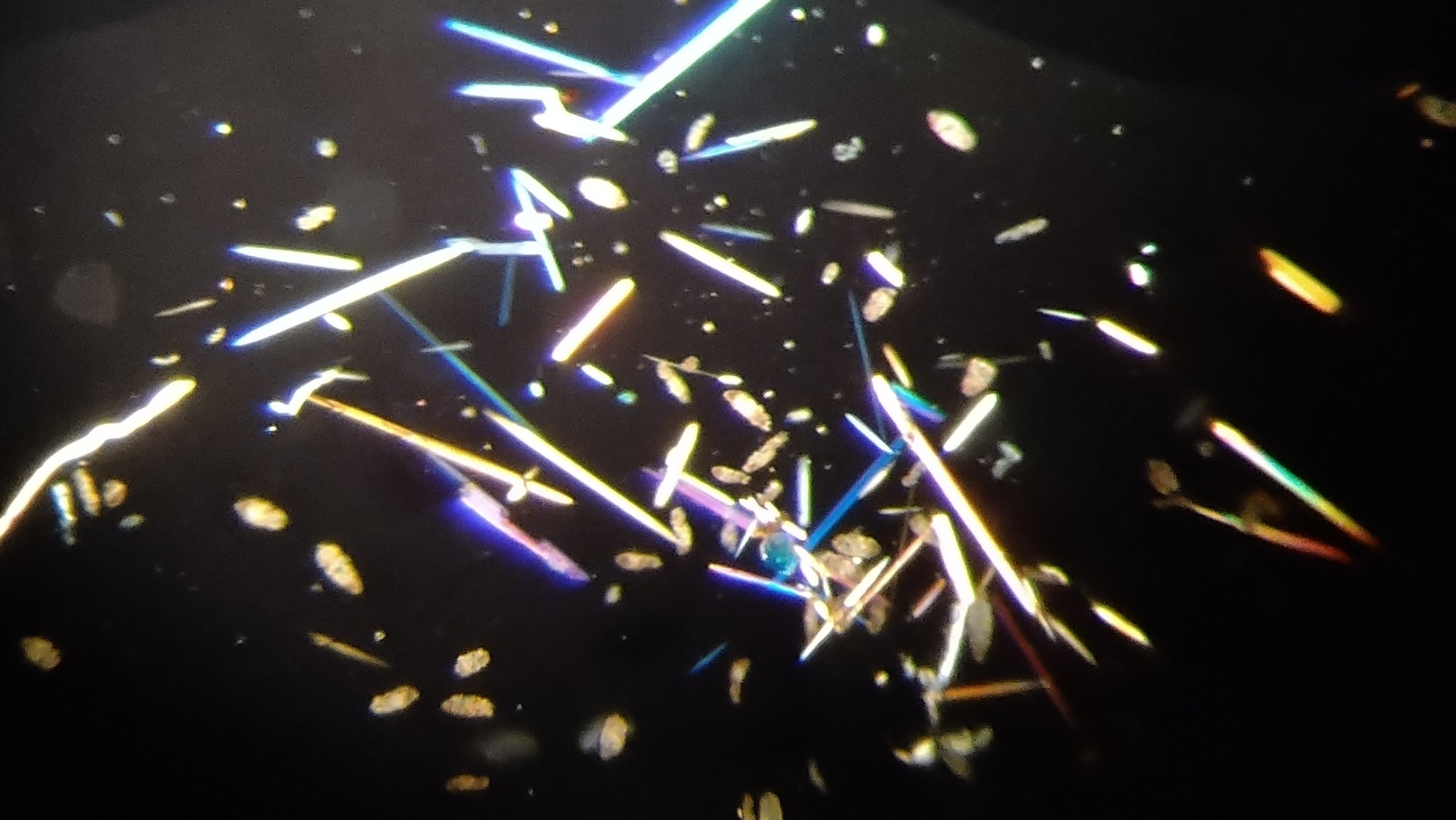
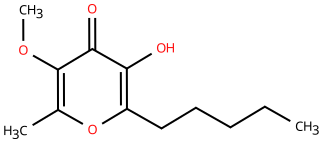
A colleague of mine, Dr. Hartmut Schubert, put them on a single-crystal X-ray diffractometer and determined the molecular structure of this compound. It is Allixin, fully named 3-hydroxy-5-methoxy-6-methyl-2-pentyl-4H-pyran-4-one. He deposited the structure with the Cambridge Crystallographic Data Centre under deposition number 2523464, it can be accessed under DOI: 10.5517/ccdc.csd.cc2qpw2d.
Allixin is the first member of a family of substances called phytoalexins with antimicrobial properties. Although the antimicrobial activities of phytoalexins are weak, they are accumulated to repel the invasion of microbes on the local surface of plants. The formation of allixin has been investigated in a detailed study by Japanese scientists:
Y. Kodera, M. Ayabe, K. Ogasawara, S. Yoshida, N. Hayashi, K. Ono:
Allixin Accumulation with Long-term Storage of Garlic;
Chem. Pharm. Bull. 2002, 50(3), 405-407; DOI: 10.1248/cpb.50.405
I don't recall any other plants that produce such an amount of crystalline compounds. However, a miscroscope will reveal many instances of other amazing crystals "living" -- or, better, deposited -- in organisms. A nice example is the video by Dr.bio4ever showing crystals of calcium oxalate (also known from rhubarb) in the skin of onions and garlic.
Some of the pharmacological effects of garlic have been summarized:
V. K. Singh, D. K. Singh:
Pharmacological Effects of Garlic (Allium sativum L.);
ARBS Annu. Rev. Biomed. Sci. 2008, 10, 6-26; DOI: 10.5016/1806-8774.2008.v10p6